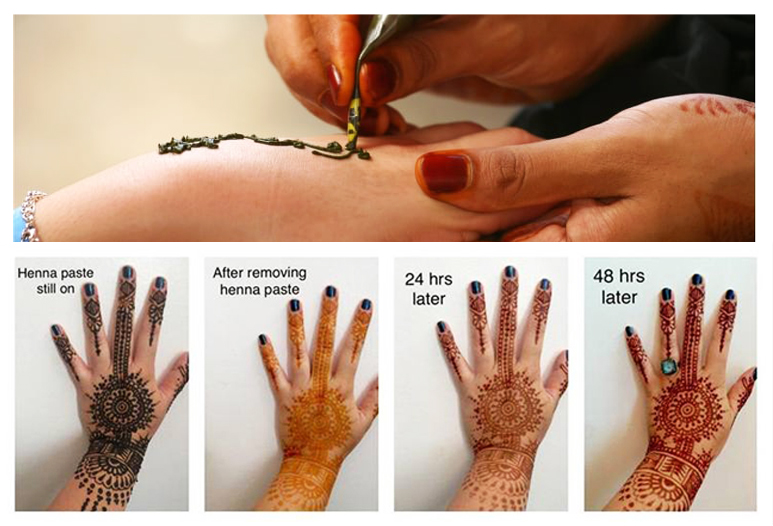
Henna Application
Henna design is be aplied to your skin with henna paste (it looks like dark puff-paint, has a mild but pleasant smell and is made from
natural ingredients), and queezed out of a tiny cone.
The application is completely pain-free and feels cool and refreshing on the skin.
Paste have to stay on your skin for as long as possible, at least a couple hours, but longer is always better. The paste will flake with friction or dissolve in water, so try to avoid those things as much as possible.
The paste will start to flake and fall off. It's best to let the henna completely fall off on it's own, but to remove the paste, DO NOT wash it off. Instead, pick it off with your fingernail or the edge of a credit card. It is fine to remove the henna paste before going to bed at night, but if you want to try to get an extra-dark stain you can seal and wrap your henna for bedtime.
When first removing the paste, the henna tattoo will be light orange. Within 48 hours, the henna will oxidize and will turn a darker red/brown color See oxidation process below.
After removing the paste, it is recommended you apply Vaseline, Olive oil, or a natural butter/cream to protect your tattoo. Some store-bought moisturizers contain chemicals that can prematurely lighten the stain, so it's best to use something natural.
Try not to get the area wet for at least 6-12 hours after paste removal, although waiting a full 24 hours is best.
It is also good to wear gloves when washing dishes if the design is on your hand.
Avoid friction as much as possible. Exfoliation of the skin is what causes henna to fade.
Excess washing of skin and friction from clothing will make the stain fade faster.FW
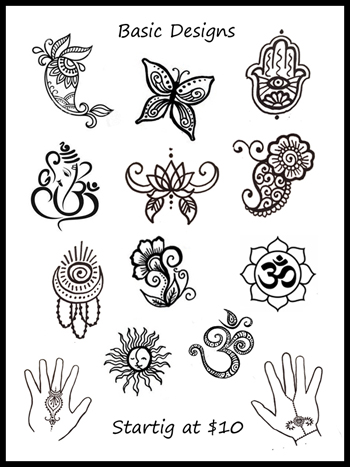
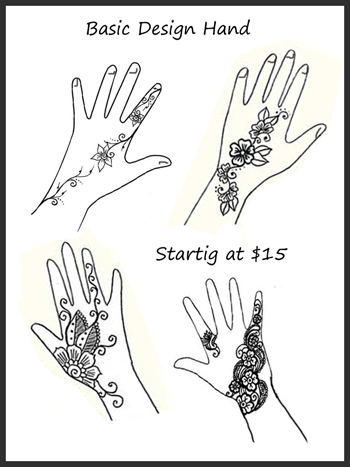
The designs on this page are used for festivals and public events and pricing is shown for traditional Mehndi Henna.
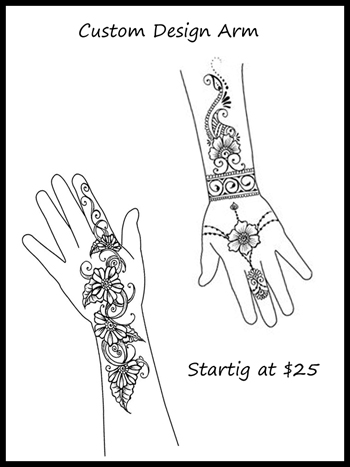
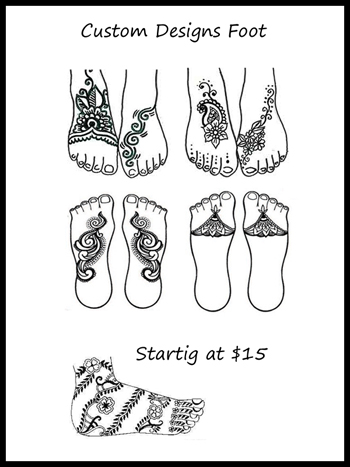
Custom work pricing will vary by design and it will increase as a design increases in size and complexity.
Contact us for a Quote